The Agentic Renaissance: Three Phases of Software's Reinvention
$285 billion wiped from IT services stocks in a single day. Boris Cherny ships 10-30 PRs per day without writing code. Three phases of how software engineering is being reinvented — tool, colleague, team.
On February 3, 2026, the builders of AI publicly grieved their own displacement. Sam Altman wrote "I felt useless and sad." Aditya Agarwal (Facebook employee #10) declared "Never write code by hand again." $285 billion was wiped from IT services stocks in a single day.
That was the emotional turning point. The structural turning point had been building for months. Here's the timeline.
The Timeline of Collapse
| When | What Happened |
|---|---|
| Oct 2025 | Claude Code handles multi-file complex tasks. AI moves from autocomplete to architect. |
| Nov 2025 | Boris Cherny (Head of Claude Code) stops writing code by hand. |
| Jan 2026 | Dario Amodei: "50% entry-level white-collar jobs gone in 5 years." |
| Feb 2026 | Semi Analysis: 4% of all GitHub commits authored by Claude Code. Predicted 20% by year-end. |
| Feb 3, 2026 | $285B wiped from IT services stocks in one day. |
| Feb 2026 | Boris Cherny on Lenny's Podcast: "Coding is largely solved." |
| Feb 2026 | Spotify confirms: best developers haven't written code since December. |
| Feb 2026 | Anthropic: $15B revenue. Claude Code alone generating ~$2B. |
This isn't a prediction. It already happened. The only question is what comes next.
Three Phases
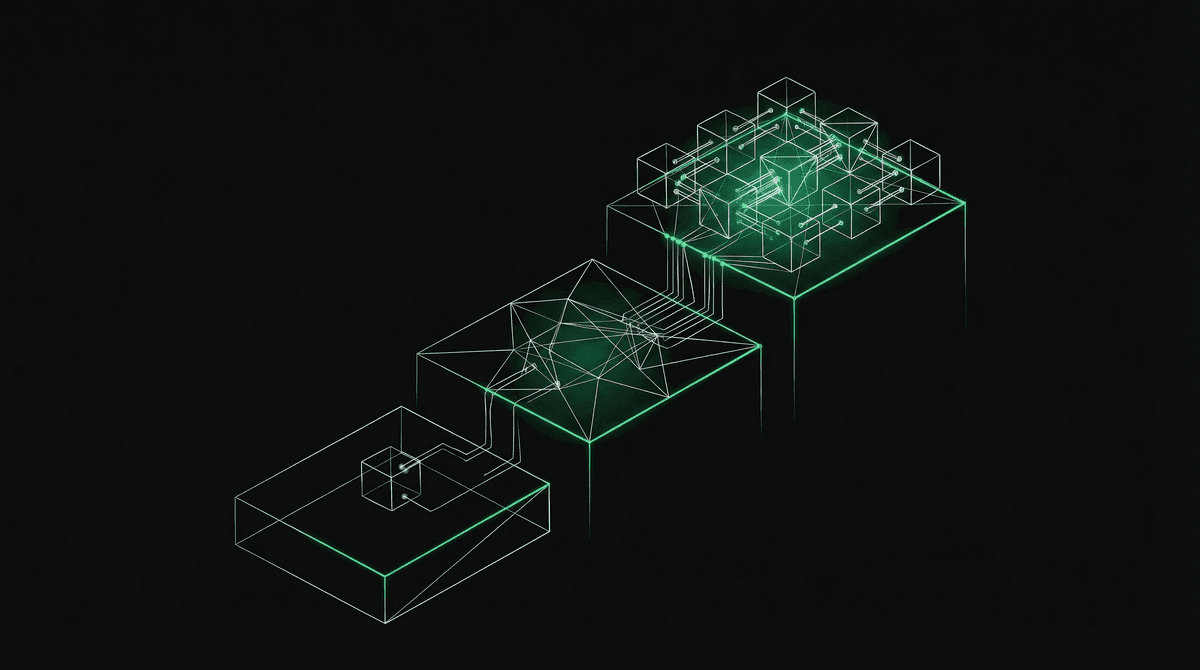
Phase 1: AI as Tool (2022-2024)
GitHub Copilot autocomplete. ChatGPT answering coding questions. Cursor tab completion. AI helped you write code faster. You were still the programmer. AI was the assistant.
Productivity gain: 20-40%. Meaningful but incremental. The developer's workflow didn't fundamentally change. You still thought about the code, wrote the code, debugged the code. AI just made the typing faster.
Phase 2: AI as Colleague (2025)
Claude Code, Cursor Agent, Devin. AI doesn't just help write code — it writes entire features. You describe what you want in natural language. The AI plans the approach, writes the code, runs the tests, iterates until it passes.
Your role shifts from writing code to reviewing code. From programmer to tech lead. From doing to directing.
Phase 3: AI as Team (2026+)
Multiple agents running in parallel. 5-10 agents working on different parts of the codebase simultaneously. One human orchestrating all of them. OpenAI's internal memo describes teams "retooling every function for agent-first."
The General Intelligence Company reports: $4,000/month in API tokens per engineer generating 20 PRs per day and hundreds of daily commits. Token spend will exceed engineer salary by end of 2026.
The org chart inverts. Managers become staff engineers. Engineers become tech leads. Everyone becomes a product manager for their projects. The human value is in knowing what to build, not how to build it.
The 8-to-80 Asymmetry
Marc Andreessen, on the same podcast where the world was processing this shift:
"The really great people are becoming spectacularly great. They're not twice as good. They're 10 times as good."
AI is a multiplier, not an adder. It multiplies what you already have.
The non-coder goes from 0 to 1 with Claude. Impressive for them. Not differentiated. Because everyone else also went from 0 to 1.
The expert goes from 8 to 80. Same tool. Completely different output. Because the expert knows which 80 to build. The non-coder doesn't even know the right 1.
What Actually Changes
The New Bottleneck
GIC (The General Intelligence Company) accelerated their engineering output 3-4x in December 2025. By January 2026, they fell behind on design and UX.
Old bottleneck: coding speed. New bottleneck: knowing what to build + designing it well.
Features can now be generated "at the speed of thought." But thinking about which features matter, designing how they should work, understanding why users need them — that requires human judgment at a rate that hasn't accelerated.
The golden age of the idea guy is here. For the first time, having the right idea and knowing how to direct its execution is worth more than knowing how to code it.
The Team Size Inversion
Imad Mostaque: "Most problems can be solved with 6-12 people with skin in the game and a whole bunch of AI."
Garry Tan (YC CEO): 25% of YC Winter 2025 startups had codebases 95% AI-generated. They don't need 50 engineers. They don't need to raise as much. The capital goes further.
A solo builder with AI can outproduce a team of 10 without it. A team of 3 with AI can outproduce a company of 50. The economics of headcount are inverting.
The Title Change
Boris: "Software engineer will start to go away. It'll be replaced by builder."
At Anthropic, the PM codes. The engineering manager codes. The designer codes. The finance person codes. Not because they learned programming. Because the tool handles the programming.
The role that matters is: can you identify the problem, scope the solution, direct the agent, and judge the output? That's a builder. Not a programmer. Not a PM. A builder.
What Stays
The Speed of the Shift
GPT-4 token price dropped 150x in 18 months. Cost falls roughly 10x every 12 months.
At this rate:
- What costs $1,000 in tokens today costs $100 next year and $10 the year after
- What takes 10 agents costs $40K/month today and $4K/month in 2027
- What requires a team of 20 engineers today requires 3 people and $10K in compute by 2028
The cost curve is the most reliable predictor. It only goes down. Everything that depends on the cost of intelligence gets repriced.
The question is not whether the agentic renaissance will happen. It already did. On February 3, 2026, $285 billion in market cap acknowledged it. The question is what you build on top of it.
Built from OpenAI's internal memo, Boris Cherny's Lenny's Podcast interview, Marc Andreessen's commentary, Anthropic's productivity data, and GIC's practitioner playbook. All February 2026.